History & Investment Guide · GoldIRAKits.org
Austrian Philharmonic
Coins:
History & Investment Guide
Issued by the Austrian Mint and inspired by Vienna's legendary orchestra, the Philharmonic combines 999.9 fine gold purity, timeless musical design, and the distinction of being the only European bullion coin denominated in euros — a staple for both European and global precious metals investors.
999.9
Fine gold purity
1989
Gold series launched
€ IRA
Euro-denominated & eligible
🎼 Vienna Philharmonic Design
✔ IRA Eligible
💶 Only Euro Bullion Coin
🌍 Global Liquidity

Written By Tim Schmidt Sr.
Gold IRA Investor
Reviewed by Sean Webster, CPA
Senior Contributor
Companies featured here may provide compensation for click throughs. This is how I maintain free research for consumers.
In This Guide
Austrian Philharmonic Coins are among the most recognized bullion coins in the world. Issued by the Austrian Mint and inspired by Vienna's legendary orchestra, they combine high-purity precious metal with timeless design and strong global demand. One of the reasons I am a fan of them is that they are IRA eligible — meaning you can buy them with retirement funds. Here is my complete guide on how to buy gold in your IRA, a strategy I personally use.
What Are Austrian
Philharmonic Coins?
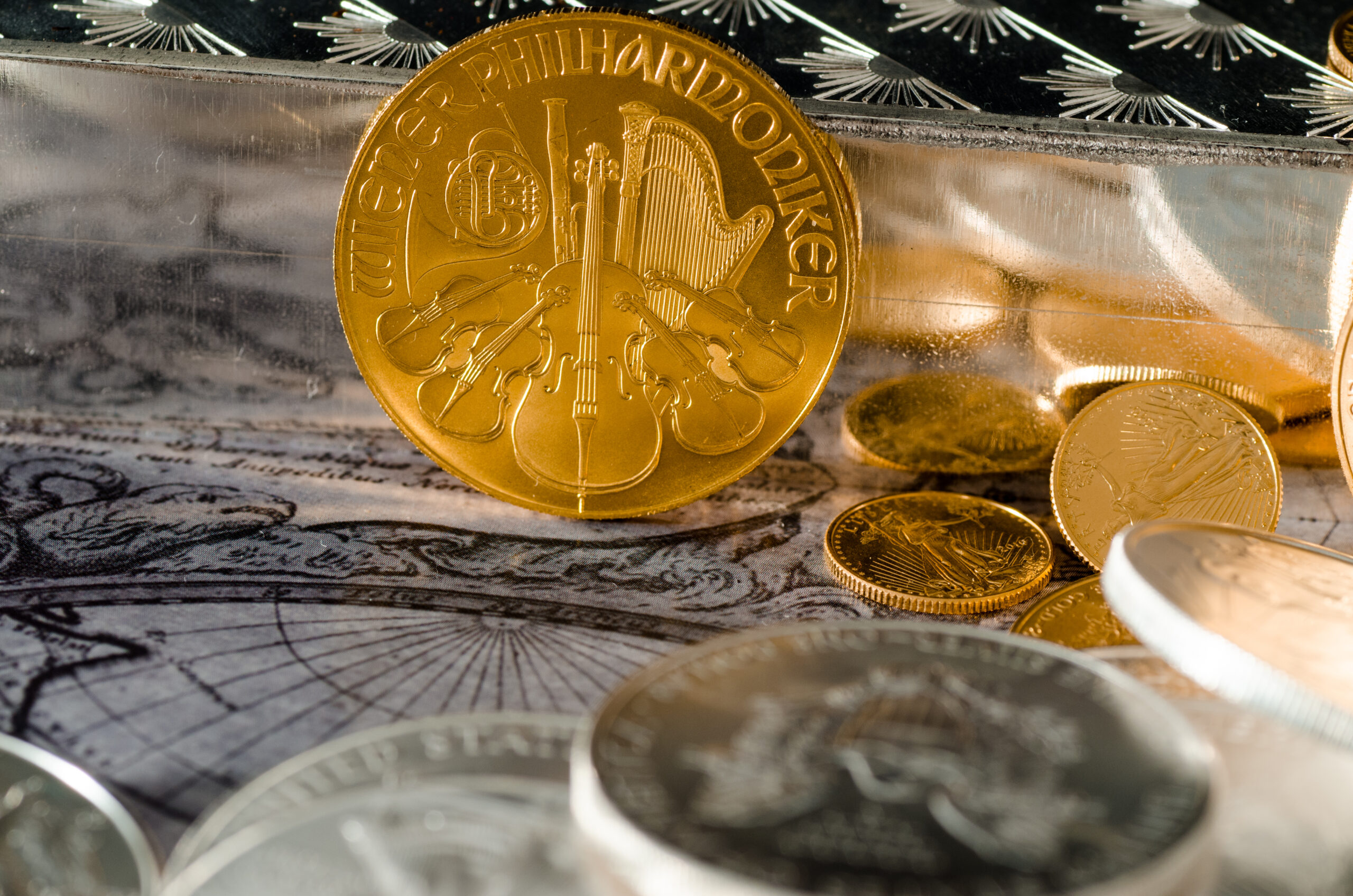
The Austrian Philharmonic — officially the Vienna Philharmonic — is a legal-tender bullion coin series minted by the Austrian Mint (Münze Österreich) and issued by the Republic of Austria. The name honors the Wiener Philharmoniker, one of the world's most celebrated orchestras. It is the only European bullion coin denominated in euros, holding exclusive legal tender status in Austria and enjoying notable popularity in European, Japanese, and global precious metals markets.
Key Facts at a Glance
Metal options: Gold (launched 1989), silver (2008), and platinum (2016). Purity: Gold 999.9 fine (24-karat), silver 999 fine, platinum 999.5 fine. Format: Primarily 1 oz coins, with select fractional gold and occasional fractional platinum issues depending on year. Legal tender: Euro-denominated with face values in euros (transitioned from Austrian schillings in 2002), but traded at metal value — not face value.
Exceptional Purity
999.9 fine gold (24-karat), 999 fine silver, 999.5 fine platinum. Among the highest purity standards of any government-issued bullion series — meeting all IRS fineness requirements for precious metals IRAs.
Only Euro Bullion Coin
The only European bullion coin denominated in euros, with legal tender status in Austria. This unique status underpins institutional recognition across EU markets and supports consistent demand from European investors and central banks.
Global Market Demand
Particularly strong in European and Japanese markets. Named the world's best-selling gold coin by units by the World Gold Council in multiple years (1992, 1995, 1996, 2000), demonstrating sustained global appetite for the series.
IRA Eligible
Gold (999.9), silver (999), and platinum (999.5) Philharmonics all meet IRS fineness requirements for self-directed precious metals IRAs. An approved custodian must hold coins at an IRS-approved depository.
History
& Design
Timeline Highlights
1989
Gold Philharmonic Launches
The Gold Vienna Philharmonic debuts in 1 oz and 1/4 oz sizes, designed by Thomas Pesendorfer, then Chief Engraver of the Austrian Mint. The series immediately gains traction in European markets as a high-purity 24-karat alternative.
1991
1/10 oz and 1/2 oz Gold Added
Fractional sizes expand investor choice, making the series accessible to a broader range of buyers and opening the Philharmonic to gift-giving and smaller-budget allocation strategies.
1992–2000
World's Best-Selling Gold Coin
The World Gold Council recognizes the Gold Philharmonic as the best-selling gold coin by units in 1992, 1995, 1996, and 2000 — a remarkable achievement reflecting the series' global demand and manufacturing consistency.
2002
Transition to Euro Denomination
Face values switch from Austrian schillings to euros — the 1 oz gold coin becomes €100. The Philharmonic becomes the only European bullion coin denominated in euros, cementing its institutional role in EU precious metals markets.
2008
Silver Philharmonic Launches
The Silver Philharmonic debuts at 999 fine, quickly becoming one of Europe's most widely traded silver bullion coins. Available in tubes and monster boxes, it becomes a core stacking vehicle for European silver investors.
2014
1/25 oz Gold Introduced
The smallest gold Philharmonic denomination is added, appealing to gift-givers and investors who want fractional gold exposure at a very low entry price point.
2016
Platinum Philharmonic Debuts
The Platinum Philharmonic at 999.5 fine rounds out the three-metal lineup, featuring the same iconic musical design at €100 face value for 1 oz. Provides portfolio diversification for investors seeking platinum exposure alongside gold and silver.
Obverse & Reverse Iconography
The Philharmonic's design has remained remarkably consistent since 1989 — a key part of its appeal and a deliberate strategy that supports immediate recognition on dealer buy lists worldwide.
The obverse features the famous pipe organ of the Musikverein's Golden Hall in Vienna — one of the world's most acoustically celebrated concert halls. The inscription includes country (Republik Österreich), weight, purity, year, and face value. It is a clean, authoritative presentation that signals legitimacy at a glance and requires no explanation to international buyers.
The reverse showcases a collection of musical instruments: a cello flanked by four violins, plus a Vienna horn, bassoon, and harp, with the legend "Wiener Philharmoniker" inscribed. The composition is balanced, detailed, and instantly recognizable worldwide. Collectors praise the artistry; investors appreciate the brand power that design consistency brings to secondary-market liquidity.
"The Philharmonic's design consistency is an underappreciated advantage — the same organ pipes on the obverse and the same instruments on the reverse year after year mean instant recognition at every dealer's buy counter from Vienna to Tokyo to New York."
— Tim Schmidt Sr., Gold IRA Investor · GoldIRAKits.org
Specifications
& Varieties
Sizes & Denominations — All Metals
| Metal | Size | Purity | Face Value (EUR) | Notes |
|---|---|---|---|---|
| Gold | 1 oz | 999.9 | €100 | Most cost-efficient; core investment size |
| 1/2 oz | 999.9 | €50 | Higher premium per oz than 1 oz | |
| 1/4 oz | 999.9 | €25 | Lower entry price; popular gift size | |
| 1/10 oz | 999.9 | €10 | Higher premium per oz; accessible entry | |
| 1/25 oz | 999.9 | €4 | Smallest size; gift-giving and fractional collectors | |
| Silver | 1 oz | 999 | €1.50 | Tubes of 20; monster boxes of 500 (25 tubes) |
| Platinum | 1 oz (primary) | 999.5 | €100 | Select fractional issues in limited years |
All weights are true troy ounces and dimensions are standardized, making weight and diameter verification with a scale and calipers straightforward. Regardless of metal, the series maintains the same core design language across all sizes — aiding brand recognition and simplifying authentication.
Metal-by-Metal Overview
Gold Philharmonic
24-karat (999.9) in five sizes. The go-to for European buyers seeking low-friction, widely accepted bullion with competitive premiums. The 1 oz is the core investment choice; the 1/25 oz serves gift-givers and fractional collectors. Standard bullion finish with bright fields, frosted relief, and a reeded edge.
Silver Philharmonic
999 fine silver in 1 oz. One of Europe's best-known silver coins, popular for high quality and liquidity. Available in tubes of 20 and monster boxes of 500 (25 tubes of 20) for bulk stacking. Note: silver typically carries VAT in EU markets — factor this into total cost.
Platinum Philharmonic
999.5 fine platinum, launched 2016. Same iconic musical design as gold and silver counterparts. The primary size is 1 oz (€100 face value) with select fractional issues in limited years. Premiums can be higher than gold due to the thinner platinum market, but the coin's recognition supports resale.
Investment Considerations:
Pricing, Liquidity & Taxes
Premiums & Spreads
Austrian Philharmonic Coins generally carry competitive premiums over spot, particularly for 1 oz gold. Smaller fractional sizes cost more per ounce due to fabrication costs. Silver carries higher relative premiums in EU markets because silver bullion is typically subject to VAT — an important cost consideration that does not apply to investment-grade gold. Platinum premiums fluctuate more with supply and demand in the thinner industrial metals market.
Spreads tighten when buying popular sizes in volume from reputable dealers. Comparing total delivered prices — including shipping, payment method fees, and applicable taxes — is essential and often more important than the quoted headline premium.
Liquidity & Resale
Liquidity is excellent, especially in Europe where the Philharmonic brand is a household name in precious metals. In North America and Asia, major dealers and many local coin shops readily buy them back. Resale is simplest when coins are uncleaned, undamaged, and in original tubes or capsules. Expect the tightest bid/ask spreads on 1 oz gold and 1 oz silver — the two highest-volume sizes in the series.
Taxes & Regulations
Tax Treatment by Jurisdiction
- ▶European Union: Investment-grade gold coins meeting EU criteria — including the Gold Philharmonic — are generally VAT-exempt. Silver bullion is typically subject to VAT, though some dealers use margin-scheme sales to reduce the visible tax impact. Local rules vary by country — confirm before purchasing.
- ▶United States: Sales tax depends on state law — many states exempt qualifying bullion. Capital gains on physical bullion are taxed as collectibles at up to 28% for long-term gains (over one year); short-term gains are taxed as ordinary income. Holding periods and reporting rules apply. See also: Gold IRA Tax Rules.
- ▶Elsewhere: Regulations, import duties, and reporting requirements can differ widely by jurisdiction. Always confirm current local tax law and any cross-border restrictions before buying or selling.
This is general information, not tax advice. Investors should consult a qualified tax professional for their specific situation before transacting.
IRA Eligibility
Austrian Philharmonic Coins in a U.S. Precious Metals IRA
Gold Philharmonics (999.9 fine), Silver Philharmonics (999 fine), and Platinum Philharmonics (999.5 fine) all meet IRS fineness standards for self-directed precious metals IRAs. An IRS-approved custodian must purchase and hold the coins at an IRS-approved depository — personal possession inside an IRA is never allowed. Eligibility and acceptable product lists can vary by custodian, so verify specific requirements and fee structures before opening an account. See the full IRA-eligible gold guide for the complete approved metals list.
Buying, Authenticating
& Storing
Where to Buy
Stick to established bullion dealers — online or brick-and-mortar — with transparent pricing, live buy-back quotes, and strong verified reviews. In some European countries, major banks sell Philharmonics at the counter. Comparing all-in costs (premium, payment fees, shipping, insurance, and applicable taxes) matters more than chasing the lowest headline premium in any single dealer's advertisement.
Smart Buying Checklist
- ▶Verify the dealer — established dealers with transparent pricing, live buy-back spreads, and strong independent reviews. Avoid sellers offering prices significantly below market with no clear explanation.
- ▶Compare total delivered cost — premium plus shipping plus payment fees plus applicable VAT or sales tax. The headline premium is only part of the equation.
- ▶Buy in volume when possible — tube quantities reduce per-coin cost for both gold and silver Philharmonics. Monster boxes of 500 silver coins offer the lowest premium per ounce for stackers.
- ▶Keep all documentation — invoices, receipts, and any original packaging support insurance claims, eventual resale, and tax reporting.
Authentication Basics
1
Measure & Weigh
Verify diameter and mass using a precise jeweler's scale and digital calipers. A genuine 1 oz coin should weigh 31.103 g. Gold has a very distinct density — any meaningful discrepancy in weight or diameter is an immediate red flag. This is your fastest and most reliable first check.
2
Visual Inspection
Examine the organ pipes on the obverse and the instrument details on the reverse under good lighting. Look for crisp lettering, a clean reeded edge, and fine detail in the instrument strings and wood grain of the cello. Counterfeits typically show softness, inconsistency, or incorrect surface texture under close examination.
3
Sound Test
Gold and silver produce a clear, sustained, high-pitched ring when tapped gently on a hard surface. Base-metal fakes or plated coins produce a dull, flat sound with significantly shorter resonance. Use a protective surface and treat the result as a supplementary check rather than standalone proof.
4
Magnet Slide Test
Gold and silver are entirely non-magnetic. Silver also exhibits a characteristic slow slide when a neodymium magnet is passed over it due to eddy currents. Any magnetic attraction from a gold coin is an immediate disqualifying red flag. Perform this test carefully to avoid scratching coin surfaces.
5
Professional Verification for High-Value Pieces
For expensive or unusual pieces, request XRF (X-ray fluorescence) or precious-metal verifier testing from a reputable dealer. This provides definitive, high-confidence verification of metal content and purity at minimal cost relative to the value of the coin.
Storage & Insurance
Home Safe
A quality fire-rated safe, discreetly anchored in an inconspicuous location. Consider a homeowner's insurance rider or specialty bullion insurance — standard policies rarely cover precious metals adequately.
Bank Safe Deposit Box
Strong physical security with off-site storage. Access limited to banking hours. Verify whether contents are insured by the bank — most provide no coverage for box contents. Confirm before relying on this option.
Professional Vaulting
Allocated or segregated storage with audited holdings and optional online account visibility. Required for IRA holdings. Compare transparency, jurisdiction of the vault, insurance limits, and annual fee structures before choosing a provider.
Packaging Best Practices
Keep coins in original tubes or quality capsules. Avoid PVC flips — they off-gas chemicals over time. Control humidity with silica gel packs. Handle minimally and never clean or polish. Cleaning permanently impairs surface quality and reduces resale value.
Conclusion:
The Philharmonic in Your Strategy
Austrian Philharmonic Coins are among the world's most recognized and trusted bullion coins — blending artistry with investment utility. Pure metal, iconic design, and global recognition make them a core holding for many precious metals investors, especially the 1 oz gold and silver pieces which offer tight spreads and strong dealer demand worldwide.
With clear knowledge of premiums, taxes, and storage options, investors can incorporate Philharmonics confidently into a long-term precious metals strategy — while enjoying a little bit of Vienna's musical heritage in every coin.
"Austrian Philharmonic Coins blend artistry with investment utility: pure metal, iconic design, and global recognition. For many investors, they're a core holding — especially the 1 oz gold and silver pieces — thanks to tight spreads and strong dealer demand across every major market."
— Tim Schmidt Sr., Gold IRA Investor · GoldIRAKits.org
Austrian Philharmonic Coins
Frequently Asked Questions
What are Austrian Philharmonic Coins, and what metals and purities do they come in?
Austrian Philharmonic Coins are legal-tender bullion from the Austrian Mint, honoring Vienna's legendary orchestra. They are issued in gold (999.9 fine), silver (999 fine), and platinum (999.5 fine) — primarily in 1 oz sizes with select fractional gold options. Denominated in euros (the only European bullion coin so denominated), they trade at metal value, not face value, in all markets worldwide.
Are Austrian Philharmonic Coins a good investment for liquidity and premiums?
Yes, particularly the 1 oz gold and 1 oz silver. Known for tight spreads and strong dealer demand, Austrian Philharmonic Coins offer competitive premiums — especially 1 oz gold, which frequently carries some of the lowest premiums for 24-karat bullion. Silver often carries higher relative premiums in VAT-levying EU markets. Liquidity is excellent in Europe and strong globally, with major dealers readily buying back undamaged coins in original packaging.
How are Austrian Philharmonic Coins taxed in the EU and United States?
In the EU, qualifying investment-grade gold Philharmonics are generally VAT-exempt, while silver typically incurs VAT (often reduced via margin schemes by dealers). In the U.S., sales tax varies by state, and bullion gains are taxed as collectibles — up to a 28% long-term rate federally. Always confirm current local laws before transacting. See the full Gold IRA Tax Rules guide for a complete breakdown.
Are Austrian Philharmonic Coins eligible for a precious metals IRA?
Yes. Gold Philharmonics (999.9), Silver Philharmonics (999), and Platinum Philharmonics (999.5) all meet IRS fineness standards for self-directed precious metals IRAs. They must be held by an IRS-approved custodian at an approved depository — personal possession inside an IRA is not permitted. Acceptable product lists can vary by custodian, so always verify eligibility and fee structures before purchasing for an IRA.
How do Austrian Philharmonic Coins compare to American Gold Eagles and Canadian Maple Leafs?
All three are globally recognized and IRA-eligible. Philharmonics are 24-karat (999.9) like Maples, often carrying competitive premiums and the unique distinction of euro denomination — making them the natural choice for European investors. Gold Eagles are 22-karat (91.67%) for added durability and have the deepest U.S. domestic liquidity. Maple Leafs frequently offer the lowest premiums for .9999 gold in North America. The best choice depends on purity preference, your local resale market, and the delivered premium at the time of purchase.
Ready to Add Philharmonic Coins to Your IRA?
Get Your Free
Get Your Free
Gold IRA Starter Kit
Our free kit includes a full IRA-eligible metals list, custodian comparison chart, step-by-step account opening guide, and fee breakdown worksheet. Zero cost. Zero obligation.
✔ IRA-Eligible Metals List
✔ Custodian Comparison Chart
✔ Step-by-Step Account Guide
✔ Fee Breakdown Worksheet
✔ Rollover Checklist
No spam. No pressure. Unsubscribe anytime.